
Projects ·
Cylinders reconditioned instead of replaced
Two cylinders after years in a machine — put back to work rather than replaced.
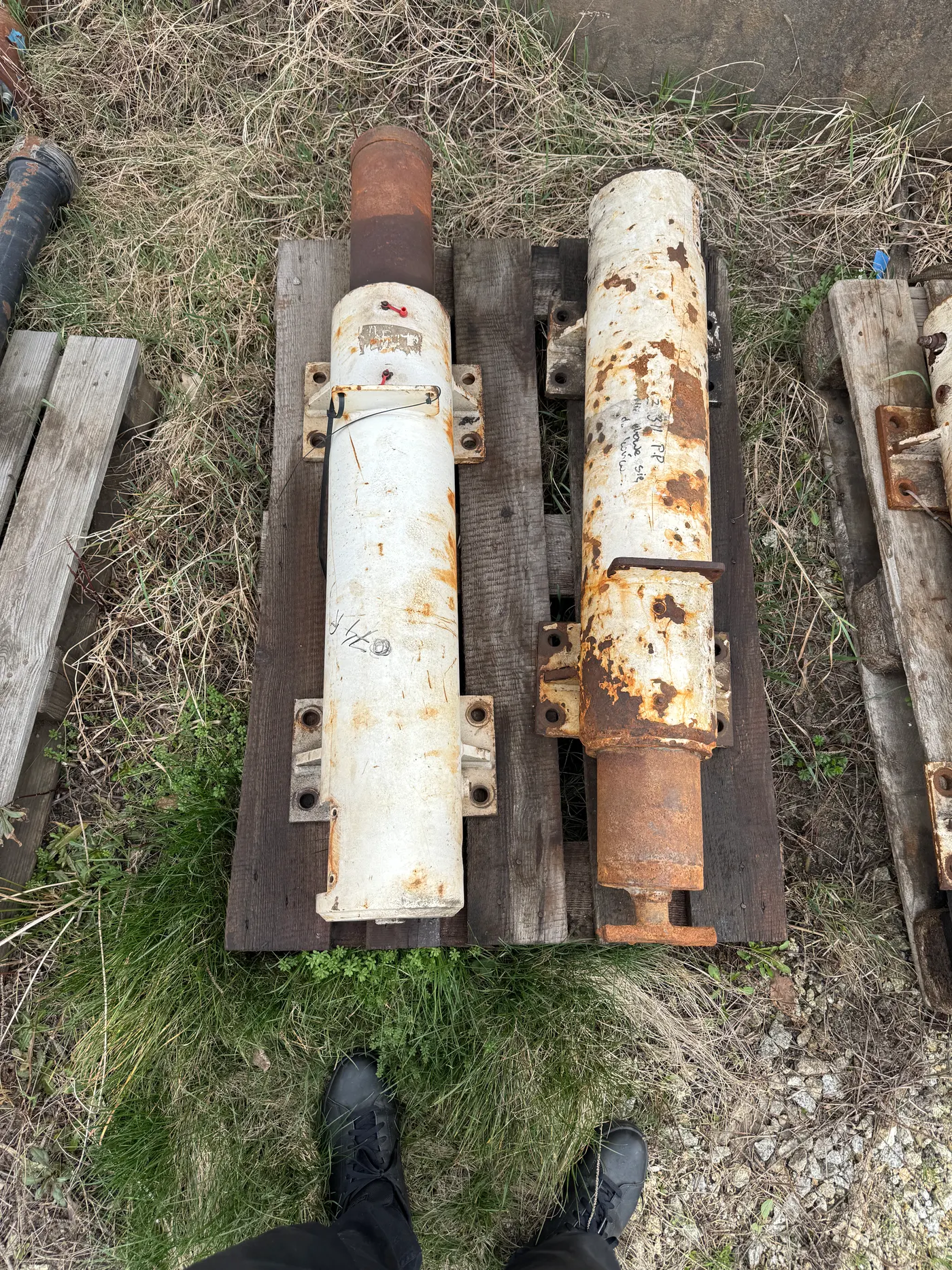
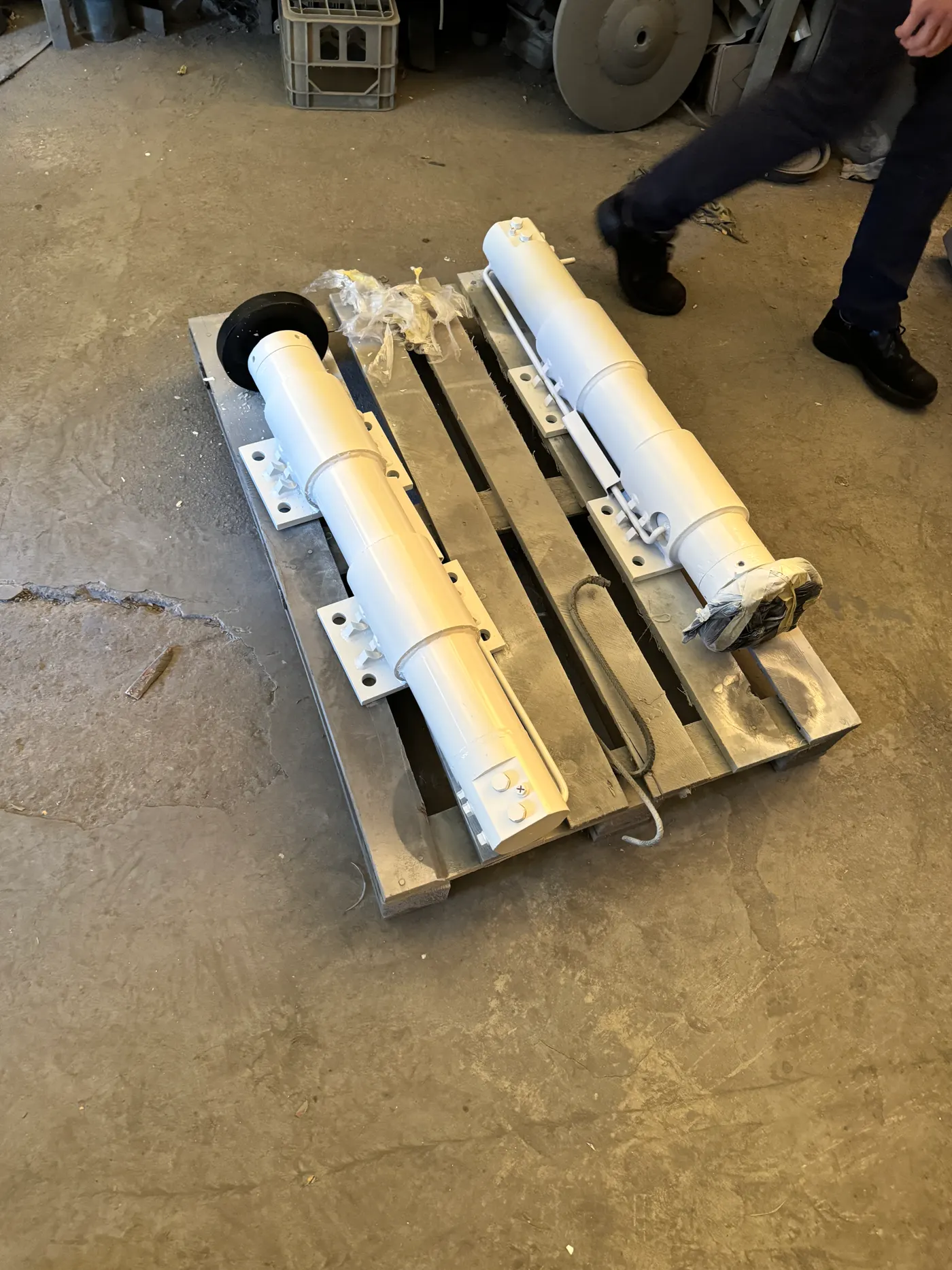
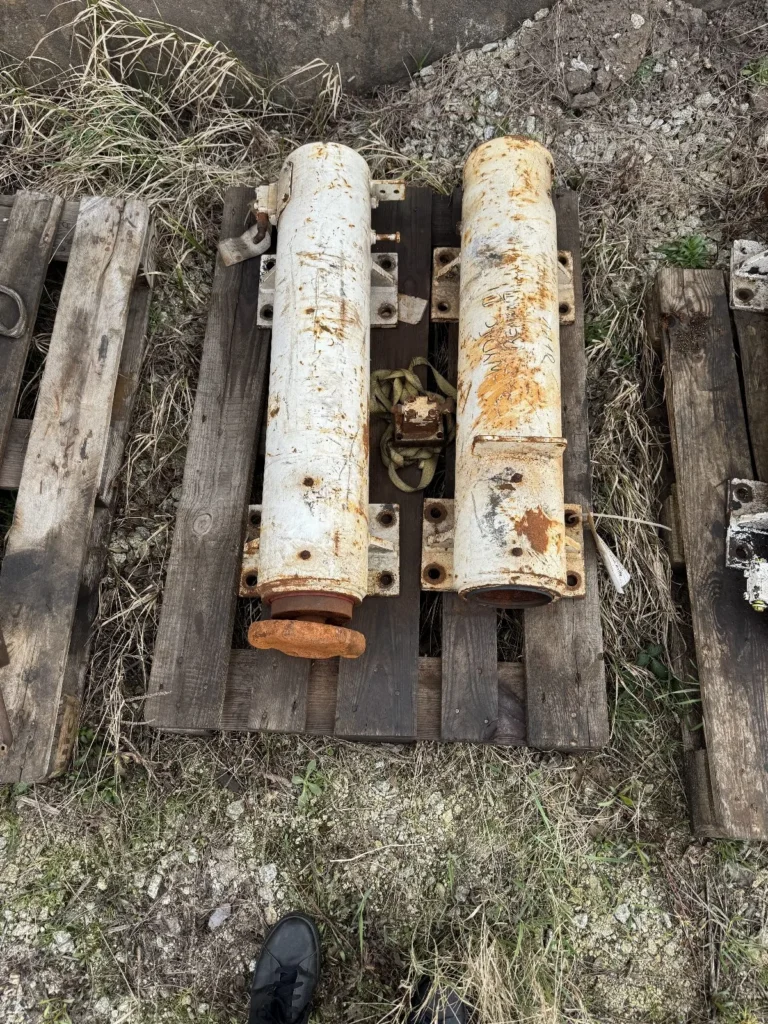
What we did
A full reconditioning cycle here, with nothing subcontracted:
- Diagnosis — stripped down and measured for actual wear.
- Rods and seats — surfaces restored to working dimension.
- Seals — complete new sealing set.
- Paint — bodies protected against corrosion.
- Pressure test — tightness verified before handover.
What the customer got
Less than a new cylinder
Working parameters as they were from the factory, at a fraction of what a new pair would have cost.
Shorter machine downtime
No waiting months on a delivery from abroad — the machine went back into production.
One contractor, one responsibility
Stripping, reconditioning, painting and pressure testing all here. No subcontractors and nobody to pass the blame to.
The machine stays in service
Including where the cylinder has no spare parts and no successor left in any catalogue.
When reconditioning pays, and when to buy new
Reconditioning is not the answer to every failure, and we do not pretend otherwise. It pays when the body and rod can be brought back to working dimension and the damage is to surfaces, seals and mountings. That covers the large majority of cylinders that reach us — including ones that look like scrap.
The second argument is availability. Cylinders in machines that have run for a decade or more frequently have no successor in the maker’s catalogue, and a substitute means altering mountings or changing the parameters of the circuit. Reconditioning sidesteps that entirely: the same assembly comes back, in the same dimensions, to the same machine.
We advise against reconditioning when the body is cracked or deformed far enough that restoring the geometry stops being repeatable. We say so after the inspection — including when it means no job for us. The customer then gets told what to look for in a replacement.
What decides how long it lasts afterwards
Three things determine how long a reconditioned cylinder will run: the condition of the rod surface, the tolerances in the seat, and whether the seals were chosen for the real working conditions. The working surface has to be smooth and hard, because it runs directly against the seal — every score mark shortens the life of the sealing set.
So we do not stop at replacing seals, even when that is what the customer asks for. New seals on a worn rod come back to us within weeks. We measure the wear before quoting and say what genuinely has to be done for the repair not to be a one-off.
The last stage is the pressure test. A cylinder leaves the workshop only after its tightness has been verified — the customer does not find out about a leak on the machine, halfway through a shift.
What to have ready when you send one in
Quoting goes much faster when we know what we are dealing with. We do not need technical documentation; in most cases a few basics and some photographs are enough.
- Photographs of the whole cylinder — from the side, and close up on the rod and the mountings.
- Basic dimensions — rod diameter, stroke, mounting centres.
- Working pressure — and what kind of machine it runs in.
- Symptoms — leak, loss of force, seizure, mechanical damage.
- Urgency — whether the machine is stopped or running on a spare.
From that we will say whether reconditioning makes sense and what it would cover. If the strip-down shows a different scope than expected, we tell you before starting the work — not afterwards, at handover.