
Services · Component reconditioning
Reconditioning of industrial and mechanical components
We recondition shafts, gearboxes, spindles, motors, conveyors, bearing seats, hydraulic cylinders and pumps — restoring the parameters they were built with rather than replacing whole assemblies, with measurements and a report.
What we do
- Reconditioning of shafts and bearing journals
- Repair of gearboxes, gears, pulleys and drives
- Reconditioning of spindles, bearing housings and conveyors
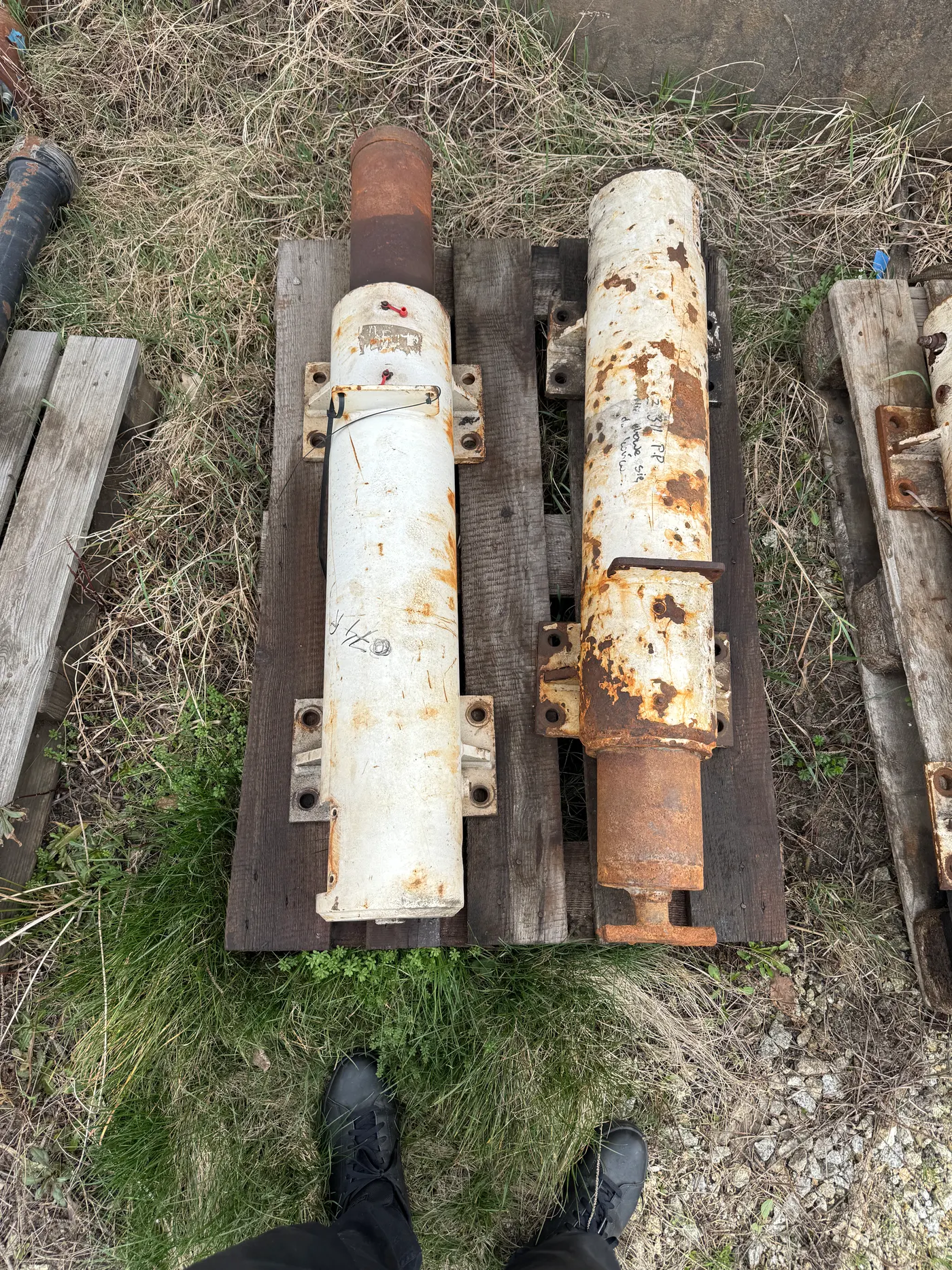
- Reconditioning of hydraulic cylinders of every type
- Repair and reconditioning of hydraulic pumps
- Repair of CNC and conventional machine tool spindles
- Repair and reconditioning of mechanical gearboxes
- Restoration of industrial machine components
- Electroplating and chrome plating of reconditioned parts
What we recondition
Hydraulic cylinder reconditioning
Reconditioning of hydraulic cylinders: single-acting, double-acting and telescopic. Honing, hard chrome plating, new sea…
Diaphragm pump reconditioning
Reconditioning of diaphragm pumps: we diagnose the cause, replace diaphragms, seals and valves, then test tightness and …
Vacuum pump reconditioning
Reconditioning of vacuum pumps: falling output, noise or trouble holding vacuum. We find the cause, restore the worn par…
Our specialisations
Single-acting cylinders
Plunger cylinders with spring or gravity return.
Double-acting cylinders
Including through-rod designs where force has to be equal in both directions.
Telescopic cylinders
Multi-stage units with long strokes, from tippers, cranes and platforms.
Cylinders with valves
Units with integrated control and safety valves, calibrated and documented.
Restoring what you already have
Reconditioning is not repair in the sense of making something work again for a while. It means measuring a worn component against what it was built to be, restoring the working surfaces to those dimensions, and testing it before it goes back. When the body of an assembly is sound — and it usually is, because bodies wear slowest — that is most of the value of a new part for a fraction of the cost.
We recondition hydraulic cylinders, pumps, gearboxes, spindles and general machine components. The work happens on our own machine tools, with a hard chrome plating bay on site, so the critical operations are not subcontracted and do not add weeks to the lead time.
What we actually take in
Hydraulic cylinders of every type — single-acting, double-acting, telescopic, and units with integrated valves. This is the largest part of the work and has its own page.
Pumps, both diaphragm and vacuum, plus gear and piston pumps from machine hydraulics.
Shafts and journals. Bearing seats worn oval or undersize, keyways beaten out, threads damaged. Surfaces are built up and machined back to the bearing fit they need.
Gearboxes, gears and pulleys. Tooth wear that has put the drive out of time, bearing seats worn in the housing, shafts that have picked up runout. Housings are rebuilt rather than replaced.
Spindles and bearing housings. Where the runout has gone, the machine cannot hold tolerance no matter what else is right. Spindle work needs measurement to a level general repair does not.
Motors, geared motors and conveyors. Shaft ends, bearing seats and mounting faces; screws and screw shafts worn thin by abrasive product, drums, and the bearing assemblies that sit in dust and never get greased properly.
How a job runs
1. Inspection and measurement. We measure the component against the drawing, or against its mating parts where no drawing exists, and establish what is cause and what is consequence.
2. Quotation split into options. Essential and recommended, separately. You decide how much gets done.
3. Restoration. Machining on our own CNC equipment, with hard chrome plating where a surface has to come back to dimension and hardness.
4. Measurement and handover. Control measurements and a written record of the work.
When reconditioning is the wrong answer
There is a line, and we would rather draw it before invoicing than after. A cracked body, a permanently deformed tube, a housing distorted by heat — these are cases where a rebuild costs more than it returns and lasts a fraction as long.
The same applies to mass-produced components that are cheap to buy new. Reconditioning a gear pump that costs little to replace is usually false economy; reconditioning a piston pump that costs many times more, and that would take months to source, usually is not. We will tell you which side of that line your part sits on.
Sending parts in
We are in south-west Poland, inside the EU, so components reach us by courier or pallet freight without customs clearance from other EU countries. Before you pay for freight, send photos — the nameplate, the whole unit, and the working surfaces — and we will tell you whether the journey is worth making.
Why choose SOWMAR?
Cost
Reconditioning typically costs a fraction of a comparable new component.
Turnaround
Quick diagnosis and short lead times, because the machining is in house.
Parts that no longer exist
On discontinued machinery, reconditioning is often the only route that does not mean replacing the machine.
Less waste
Restoring a component uses a fraction of the material and energy that making a new one does.
Related services
Diaphragm pump reconditioning
Reconditioning of diaphragm pumps: we diagnose the cause, replace diaphragms, seals and valves, then test tigh…
Vacuum pump reconditioning
Reconditioning of vacuum pumps: falling output, noise or trouble holding vacuum. We find the cause, restore th…
3D design and FEA
We design machines, dies, welding and soldering tooling and spare parts. FEA calculations and fatigue assessme…
Sending parts to us from abroad
We are based near Wrocław in south-west Poland, inside the EU. Parts arrive here by courier or pallet freight from across Poland and from EU countries — there is no customs clearance on shipments sent within the EU, so a pallet from Germany or Czechia moves the same way a domestic one does.
1
Send photos first, not the part
A photo of the nameplate, a photo of the whole unit and a line about what it does wrong. We will tell you whether it is worth reconditioning before you pay for freight.
2
Drain the oil
Hydraulic units must be drained before dispatch — couriers refuse them otherwise, and a leaking pallet is usually rejected on arrival.
3
Pallet, not a parcel
Anything above roughly 30 kg or 1.5 m travels safest strapped to a pallet, with the rod end protected. Long cylinders need the rod retracted and secured.
4
Send it to the workshop address
ul. Stalowa 1-13, hala 17, 55-330 Błonie, Poland. Put your company name and a contact number on the paperwork so we can match the pallet to the enquiry.
We can quote and invoice in EUR. If you are a VAT-registered business in another EU country, tell us your VAT number when you ask for the quote. Return freight is arranged the same way the part came in — we will confirm the cost together with the quotation, before any work starts.