
Services · Production processes
Sandblasting and wet painting
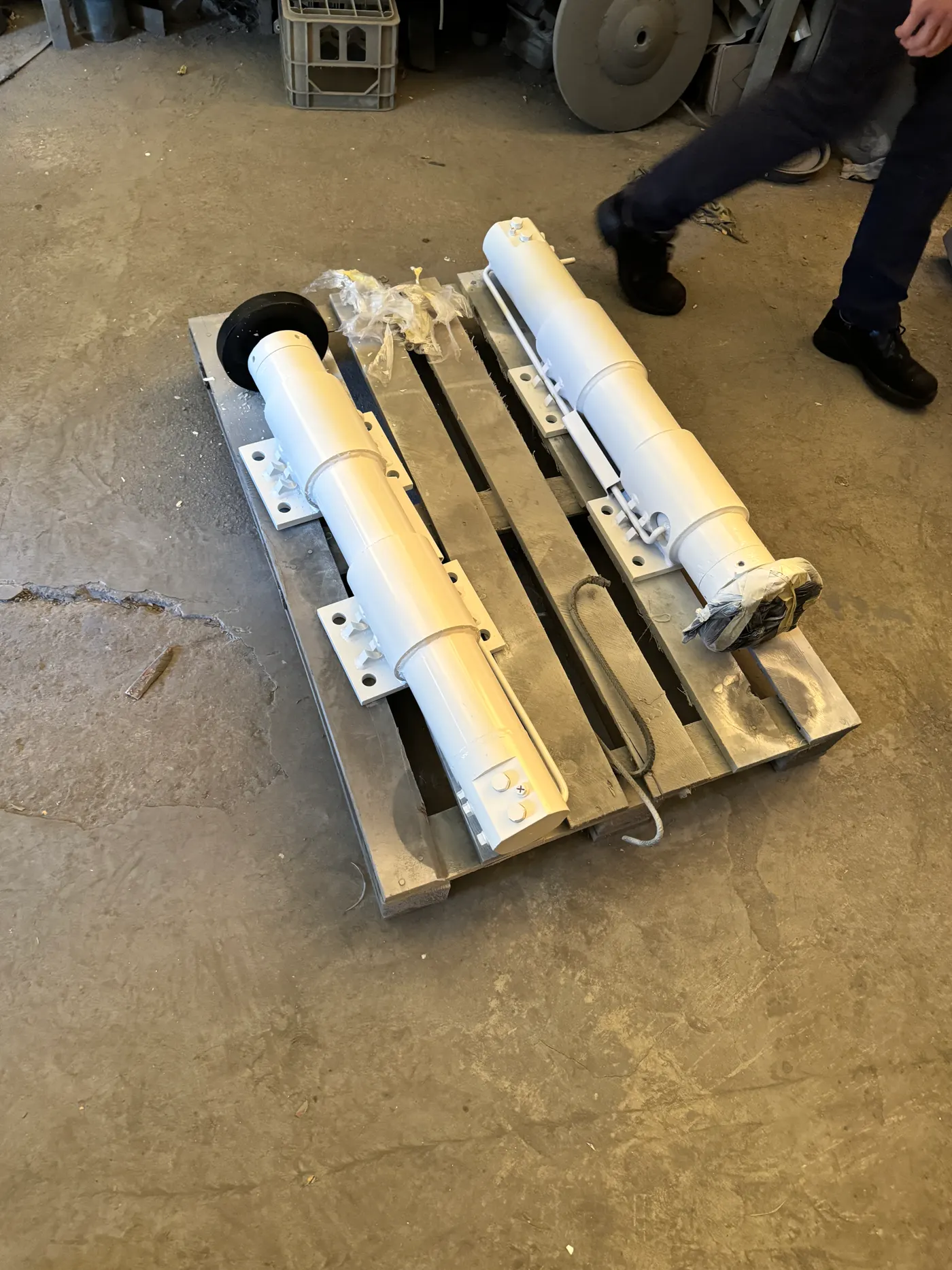
Sandblasting and wet painting in our own booth. Surface preparation decides how long a coating lasts, so that is where most of the work goes.
What we do
- Blasting of cylinder components
- Wet painting in a spray booth
- Powder coating of smaller components
- Colour selection to RAL
- Primer coats
- Finish coats
- Drying under controlled conditions
- Coating thickness verification
Our specialisations
Blasting
Surface preparation by blasting — the step that decides whether the coating stays on.
Wet painting
Wet paint in a booth, for coating systems that powder cannot match on large or repaired items.
Corrosion resistance
Coating systems chosen for the atmosphere and chemicals the item will actually meet.
Industrial finish
A finish to industrial standard, with the coating thickness checked rather than assumed.
Preparation is most of the job
Coatings fail at the interface, not in the film. A good paint system over a poorly prepared surface will lift within a year; an ordinary system over a properly blasted one will outlast it several times over. So most of the effort here goes into what happens before the first coat.
Blasting removes rust, mill scale and old coatings, and leaves a surface profile for the primer to key into. On reconditioned components it also exposes what was underneath — cracks, pitting and previous repairs that the old paint was hiding. That is frequently useful information in its own right, and we report it rather than painting over it.
Coating systems chosen for the conditions
The right system depends on where the item works. Indoors in a dry hall is a different problem from outdoors, which is different again from a wet process area or somewhere with chemical exposure.
We specify the system accordingly — primer and finish coats, applied in a booth and dried under controlled conditions — and verify the coating thickness rather than assuming it. Colours are to RAL, so a repaired item can go back matching the rest of the machine instead of announcing itself.
Smaller components can be powder coated where that suits the item better than wet paint.
As part of the wider job
Most of this work is the last stage of something else: a reconditioned cylinder, a fabricated structure, a machine part that has been rebuilt. Having it in house means the item is not shipped to a coater and back with a week added to the lead time, and it does not arrive back damaged in transit.
It also means the surfaces that must not be painted — bearing seats, mating faces, hydraulic ports, chrome-plated rods — are masked by people who know what the item is, which is the most common way a good paint job ruins a good repair.
Related services
3D design and FEA
We design machines, dies, welding and soldering tooling and spare parts. FEA calculations and fatigue assessme…
3D scanning of parts and machines
We scan parts with no documentation, machines for installation design, and components to be reproduced. A scan…
Assembly and testing
Assembly and testing of machines, assemblies and industrial equipment. Pressure and function testing with docu…
Sending parts to us from abroad
We are based near Wrocław in south-west Poland, inside the EU. Parts arrive here by courier or pallet freight from across Poland and from EU countries — there is no customs clearance on shipments sent within the EU, so a pallet from Germany or Czechia moves the same way a domestic one does.
1
Send photos first, not the part
A photo of the nameplate, a photo of the whole unit and a line about what it does wrong. We will tell you whether it is worth reconditioning before you pay for freight.
2
Drain the oil
Hydraulic units must be drained before dispatch — couriers refuse them otherwise, and a leaking pallet is usually rejected on arrival.
3
Pallet, not a parcel
Anything above roughly 30 kg or 1.5 m travels safest strapped to a pallet, with the rod end protected. Long cylinders need the rod retracted and secured.
4
Send it to the workshop address
ul. Stalowa 1-13, hala 17, 55-330 Błonie, Poland. Put your company name and a contact number on the paperwork so we can match the pallet to the enquiry.
We can quote and invoice in EUR. If you are a VAT-registered business in another EU country, tell us your VAT number when you ask for the quote. Return freight is arranged the same way the part came in — we will confirm the cost together with the quotation, before any work starts.