
Services · Machine safety & CE
Machine safety and CE marking
Safety audits, CE documentation, risk assessment and bringing machines up to the requirements of the directives — usually on machines that are already running.
What we do
- Health and safety audits
- Preparation of documentation for CE marking
- Occupational risk assessment for workstations
- Bringing machines up to the machinery directive requirements
- Health and safety training for staff
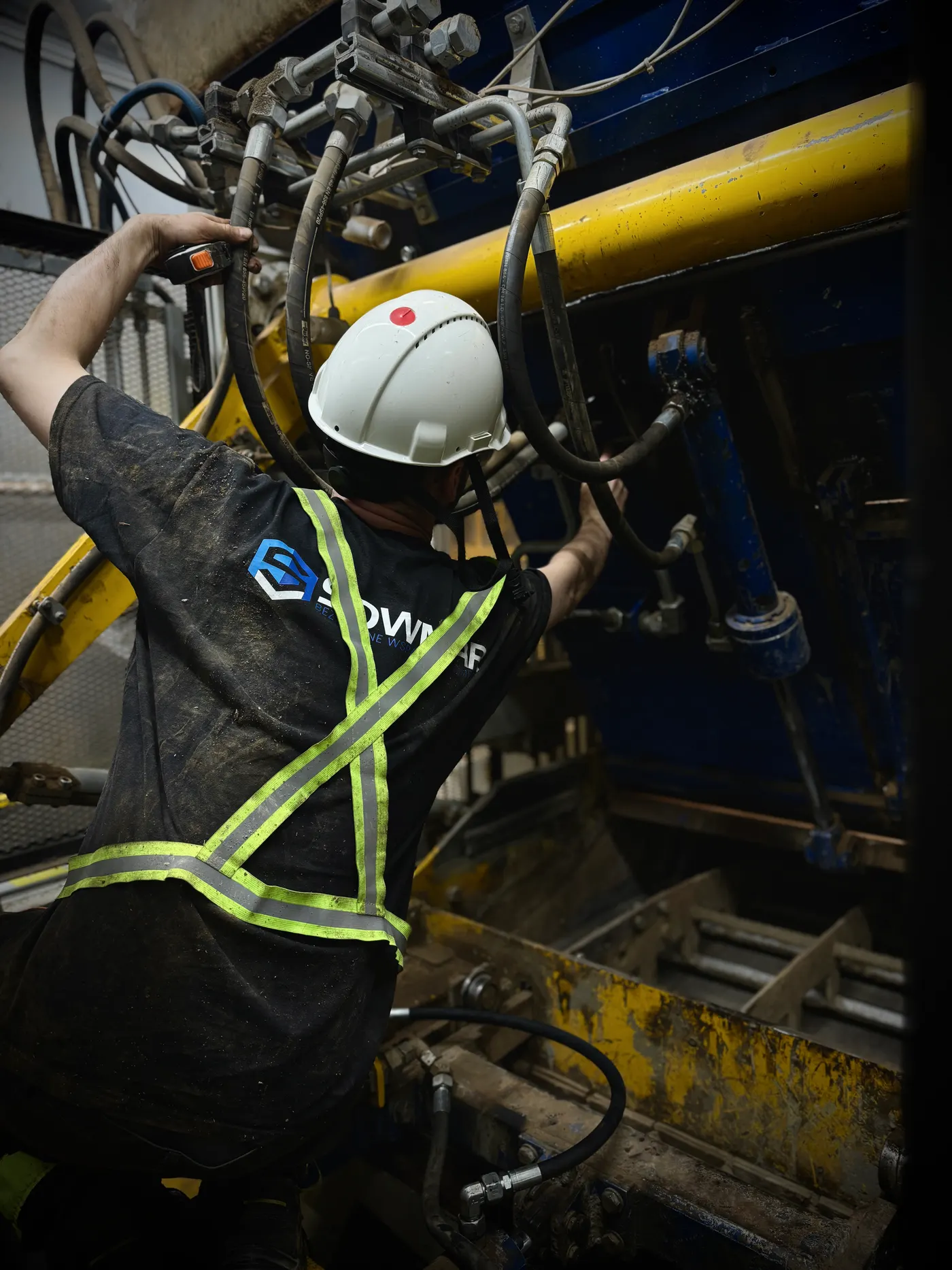
Safety work on machines that are already running
We carry out safety audits, prepare CE documentation, do occupational risk assessments and bring machines up to the requirements of the machinery directives. We also run health and safety training.
Most of this work is on machinery that is already in service — being upgraded, being relocated, or taken over from a previous owner. That is a different problem from certifying something new, because the machine exists, it is producing, and whatever has to change has to be done in a window somebody has to plan for.
Where machines usually fall short
Guarding that was removed. Interlocks bypassed, guards taken off to make a job easier and never refitted. This is the most common finding and generally the easiest to correct.
Machines imported without a file. A machine bought second-hand from abroad frequently arrives with nothing — no declaration, no manual, no schematic. The machine may be perfectly sound; what is missing is the documentation that says so.
Controls that predate the requirements. Emergency stop circuits, two-hand controls and safety relays on older machines often do not meet what is now expected of them. This is normally where the real work is, and it usually goes together with a control cabinet rebuild.
Modified machines. A machine substantially modified becomes, in regulatory terms, a different machine. Plants are frequently unaware that a modification they made years ago moved the obligation onto them.
How we run it
We start with an audit of the machine as it stands, and produce a prioritised list rather than an undifferentiated one — what stops the machine being legally operable, what should be fixed at the next opportunity, and what is worth doing but is not urgent.
Then the work itself, which is where having the mechanical, electrical and fabrication capability in one place matters: a guard has to be made, fitted, interlocked and wired, and splitting that across contractors is how it ends up half done.
The documentation is completed alongside the work rather than reconstructed afterwards, because a file written from memory is worth less than the work it describes.
Why choose SOWMAR?
Compliance
Work aimed at compliance with labour law and the applicable EU directives.
The full file
We prepare the required documents and declarations, not just the parts that are easy.
Training
Health and safety training for the people who actually operate the machine.
Audits
Safety audits and risk assessments, with the findings prioritised rather than simply listed.
Related services
3D design and FEA
We design machines, dies, welding and soldering tooling and spare parts. FEA calculations and fatigue assessme…
3D scanning of parts and machines
We scan parts with no documentation, machines for installation design, and components to be reproduced. A scan…
AI for manufacturers: agents and a documentation assistant
An assistant answers questions from plant documentation and cites the source. Agents prepare quotes, orders an…