
Services · Cylinder reconditioning
Single-acting cylinder reconditioning
Reconditioning of plunger cylinders with a full technical inspection and a return to factory parameters. Wrocław and all of Poland.
Cylinder reconditioning
Repair and reconditioning of single-acting plunger cylinders: seals, plungers, honing and pressure testing. Full technical diagnosis before any work starts.
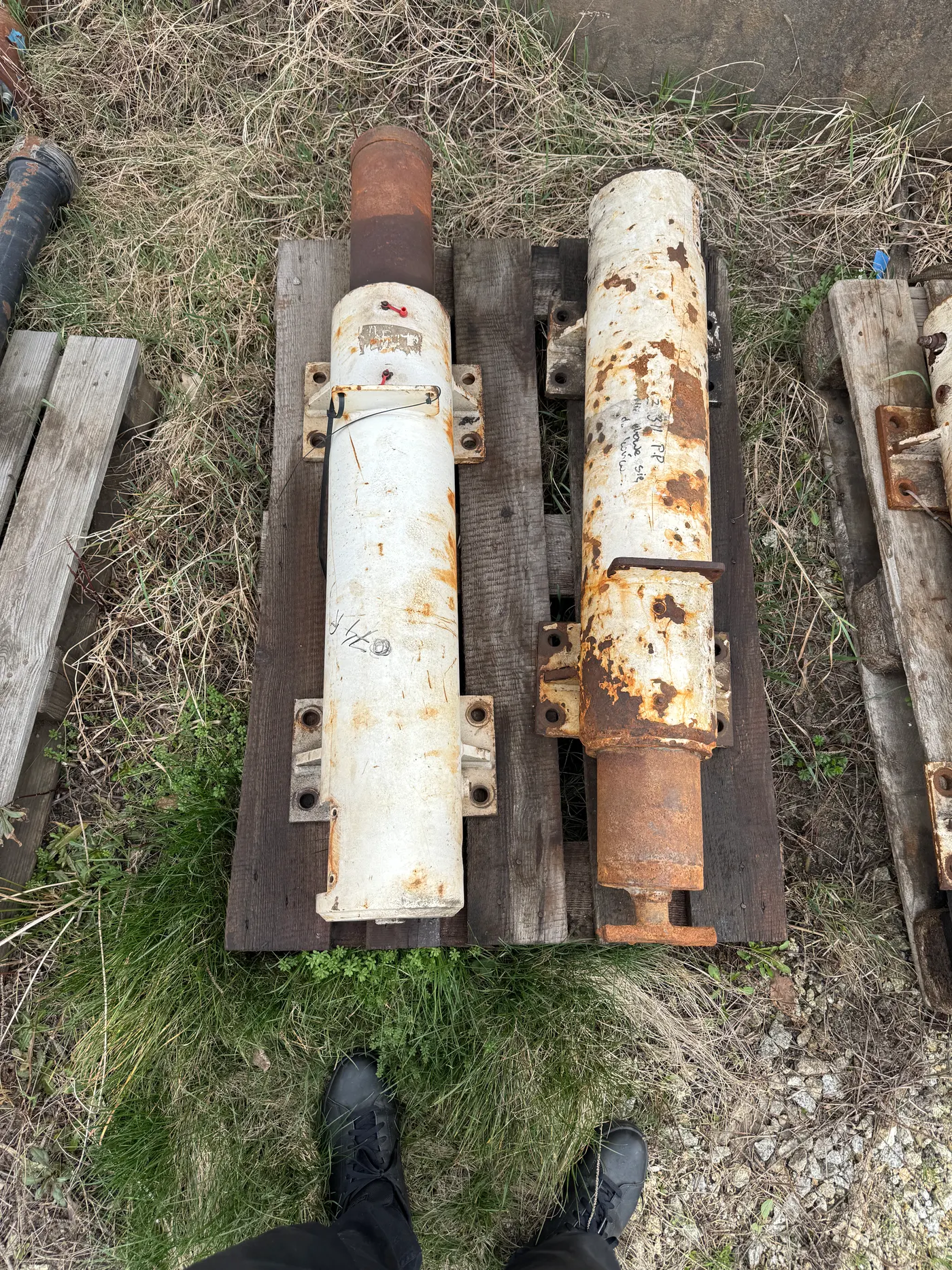
Our specialisations
Initial diagnosis
Assessment of condition, tolerance measurement and inspection of the working surfaces for damage.
Stripping and cleaning
Careful dismantling with photographic records, followed by industrial cleaning of every component.
Surface machining
Grinding, polishing and CNC work on the plunger and the bore to bring both back to specification.
New sealing set
New seals selected for the working pressure, temperature and fluid the circuit actually runs on.
Assembly and testing
Assembly, pressure testing, and checks on tightness and performance under load.
How a single-acting cylinder works
A single-acting hydraulic cylinder — also called a plunger cylinder — does work in one direction only, driven by fluid pressure. The main parts are a steel or cast iron barrel, the plunger with its seal, the guides, and the sealing system that holds the circuit tight at working pressures up to around 350 bar.
The plunger extends under oil pressure fed to the working chamber. The return stroke comes from something else: a return spring, the weight of the load itself, or a separate mechanism. That arrangement suits hydraulic presses, lifting rams, clamping mechanisms and hold-down systems on production machinery.
The sealing system is the part that decides service life. On a single-acting cylinder it consists of the plunger seal (usually a U-cup or a compact seal), the guide seal and the housing seal. Seal materials are chosen from the working parameters — oil temperature, working pressure, fluid type, and how often the cylinder cycles.
What reconditioning involves
Our machining facility lets us work to IT7–IT9 tolerances. CNC lathes handle plungers from 16 mm to 500 mm in diameter, finished to Ra 0.4–0.8 µm, which is what the seals need to work properly and what keeps internal losses down.
Bores are honed or internally ground to restore cylindricity and roundness. On heavily worn bores we recondition by hard chrome plating, which restores both the dimension and the surface hardness. The plating bay is ours, so that step is not subcontracted and does not add a week to the lead time.
Final testing covers internal tightness at 1.5 times nominal pressure, pressure drop over time, smoothness of travel and performance. Every reconditioned cylinder leaves with a test report and a warranty on the work.
What you get back
- Plunger geometry restored to the original dimensions
- Guides replaced with wear-resistant composite materials
- Bore reconditioned within IT7–IT9 tolerances
- Seals selected for your actual operating conditions, not the catalogue default
- The option to change the specification — stroke or diameter — while it is apart
- Documentation covering the work carried out
Related services
Bosch Rexroth cylinder reconditioning
Reconditioning of Bosch Rexroth hydraulic cylinders: end cushioning, stroke measurement, rod chrome plating an…
Cylinders with safety valves
We build and service hydraulic cylinders fitted with safety valves. Valve calibration, pressure testing and do…
Double-acting cylinder reconditioning
Reconditioning of double-acting hydraulic cylinders: diagnosis, seals, rods, honing and pressure testing. Hard…
Before you call
The three questions customers ask most often — answered before we raise an invoice.
A hydraulic cylinder losing force — five common causes
The machine runs slower than it used to, the cylinder will not reach the end of stroke, or it creeps down under load
ReadHow to measure a cylinder and get a quote without sending it in
The cylinder is still fitted in the machine and you need to know the cost of repair before deciding to take it out
ReadSending parts to us from abroad
We are based near Wrocław in south-west Poland, inside the EU. Parts arrive here by courier or pallet freight from across Poland and from EU countries — there is no customs clearance on shipments sent within the EU, so a pallet from Germany or Czechia moves the same way a domestic one does.
1
Send photos first, not the part
A photo of the nameplate, a photo of the whole unit and a line about what it does wrong. We will tell you whether it is worth reconditioning before you pay for freight.
2
Drain the oil
Hydraulic units must be drained before dispatch — couriers refuse them otherwise, and a leaking pallet is usually rejected on arrival.
3
Pallet, not a parcel
Anything above roughly 30 kg or 1.5 m travels safest strapped to a pallet, with the rod end protected. Long cylinders need the rod retracted and secured.
4
Send it to the workshop address
ul. Stalowa 1-13, hala 17, 55-330 Błonie, Poland. Put your company name and a contact number on the paperwork so we can match the pallet to the enquiry.
We can quote and invoice in EUR. If you are a VAT-registered business in another EU country, tell us your VAT number when you ask for the quote. Return freight is arranged the same way the part came in — we will confirm the cost together with the quotation, before any work starts.