
Services · Component reconditioning
Diaphragm pump reconditioning
We find the cause of the failure, replace diaphragms, seals and valves, and test the pump for tightness and output before it leaves. Wrocław and Lower Silesia.
What we do
- Diagnosis and assessment of condition
- Inspection of diaphragms and seals
- Checking of the pump valves
- Reconditioning or replacement of damaged parts
- Assembly and function testing
- Tightness and output verification
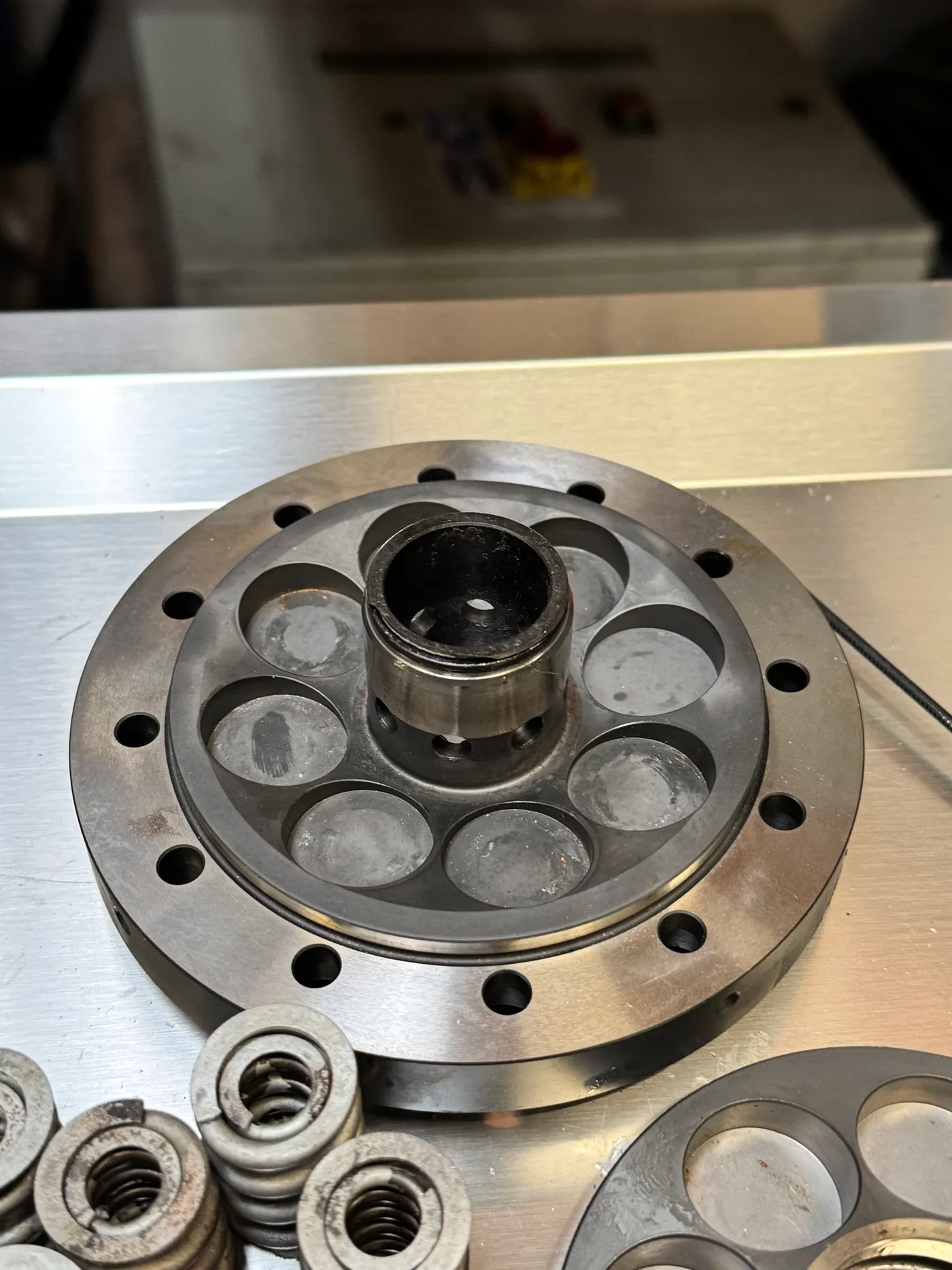
Our specialisations
Diaphragms
The fastest-wearing part. Replacing it restores full output — provided the reason it failed has been dealt with.
Seals
What keeps the circuit tight and the pump working without losses.
Valves
Inspection and repair of the components that decide whether the pump moves anything at all.
Working surfaces
Restored to specification, which is what makes buying a new pump avoidable.
Reconditioning instead of replacing
Diaphragm pumps matter more than their price suggests, because what they move is usually part of a process that stops without them. Intensive duty wears the internals — that is normal and does not by itself mean buying a new pump. In most cases reconditioning restores full function and extends the pump’s life for a fraction of the replacement cost.
Why the diaphragm failed
Replacing a diaphragm is easy. Replacing it without establishing why it failed means doing it again in a few months, so that is where we start.
Chemical attack. The diaphragm material was wrong for the medium, or the medium changed and nobody changed the diaphragm. The tell is swelling or embrittlement rather than a clean tear.
Mechanical fatigue. Normal end of life — the diaphragm has simply flexed enough times. A clean tear at the flex line, and nothing else wrong.
Running dry or against a closed valve. Damages the diaphragm quickly and usually the valves with it. If we find valve damage alongside a torn diaphragm, this is normally why.
Contamination. Solids in the medium score the seats so the valves stop closing. Output falls, the pump works harder, and the diaphragm takes the strain.
What the job covers
We strip and assess the pump, replace diaphragms, seals and valves, and restore working surfaces where they can be restored rather than replaced. Then it is assembled and tested: tightness, output and correct operation, checked before it goes back to you.
Tell us what the pump moves — the medium, the temperature and the concentration. That decides the diaphragm and seal materials, and therefore how long the repair lasts. It is the single most useful thing you can send us besides the pump itself.
Why choose SOWMAR?
Cheaper than replacement
Reconditioning instead of buying a new unit, particularly on process pumps.
Shorter lead time
Less waiting than importing a replacement pump.
Eight years of it
We know how these pumps are built and how they typically fail.
Tested before handover
Tightness, output and correct operation, checked before the pump goes back.
Related services
Reconditioning of industrial and mechanical components
Reconditioning of shafts, gearboxes, spindles, motors, conveyors, hydraulic cylinders and pumps. Restored to s…
Vacuum pump reconditioning
Reconditioning of vacuum pumps: falling output, noise or trouble holding vacuum. We find the cause, restore th…
3D design and FEA
We design machines, dies, welding and soldering tooling and spare parts. FEA calculations and fatigue assessme…
Sending parts to us from abroad
We are based near Wrocław in south-west Poland, inside the EU. Parts arrive here by courier or pallet freight from across Poland and from EU countries — there is no customs clearance on shipments sent within the EU, so a pallet from Germany or Czechia moves the same way a domestic one does.
1
Send photos first, not the part
A photo of the nameplate, a photo of the whole unit and a line about what it does wrong. We will tell you whether it is worth reconditioning before you pay for freight.
2
Drain the oil
Hydraulic units must be drained before dispatch — couriers refuse them otherwise, and a leaking pallet is usually rejected on arrival.
3
Pallet, not a parcel
Anything above roughly 30 kg or 1.5 m travels safest strapped to a pallet, with the rod end protected. Long cylinders need the rod retracted and secured.
4
Send it to the workshop address
ul. Stalowa 1-13, hala 17, 55-330 Błonie, Poland. Put your company name and a contact number on the paperwork so we can match the pallet to the enquiry.
We can quote and invoice in EUR. If you are a VAT-registered business in another EU country, tell us your VAT number when you ask for the quote. Return freight is arranged the same way the part came in — we will confirm the cost together with the quotation, before any work starts.