
Projects ·
Installing four silos — chemical anchoring and levelling
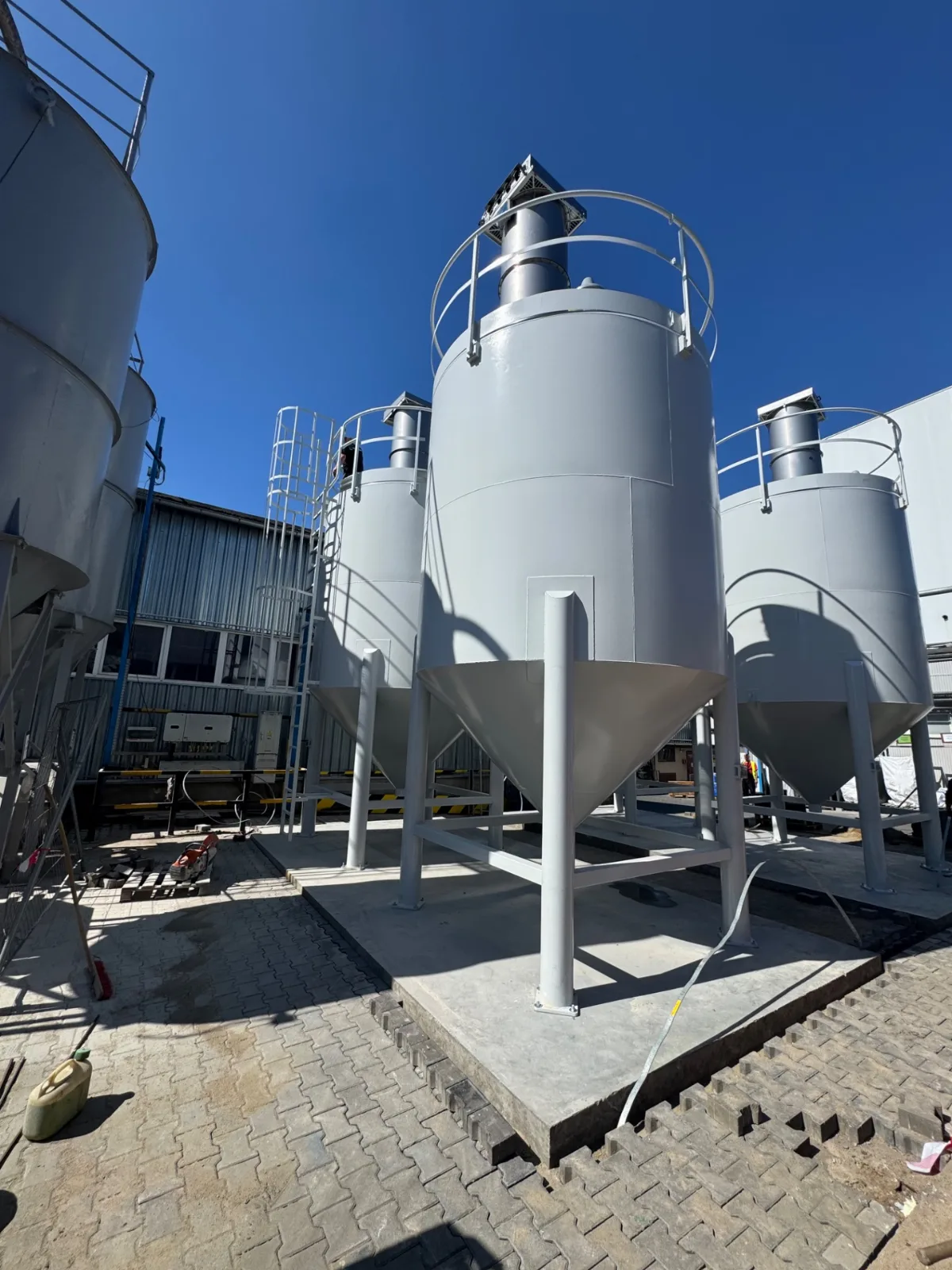
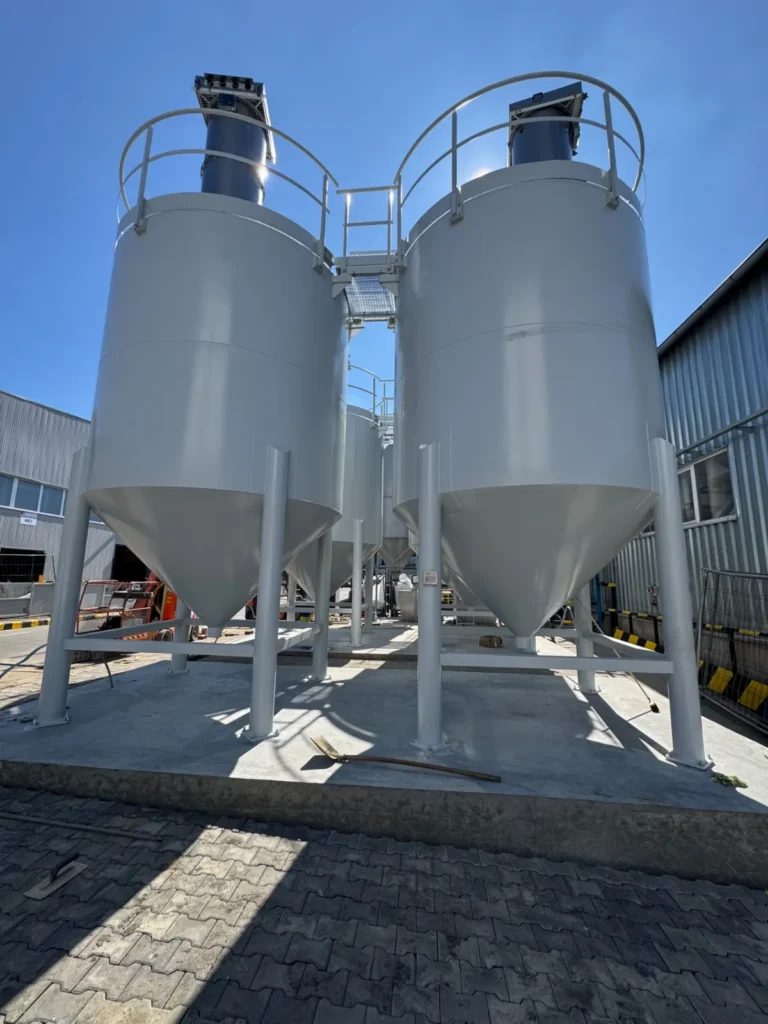
Structures set on a prepared foundation, anchored and levelled ready for service.
What the job involved
The customer had prepared a concrete foundation for four silos. Our task was the installation: positioning, setting out and drilling the anchor holes to the drawing, bedding the studs in chemical anchor, levelling and fixing the whole thing down.
- Setting out — anchor positions to the structural drawing.
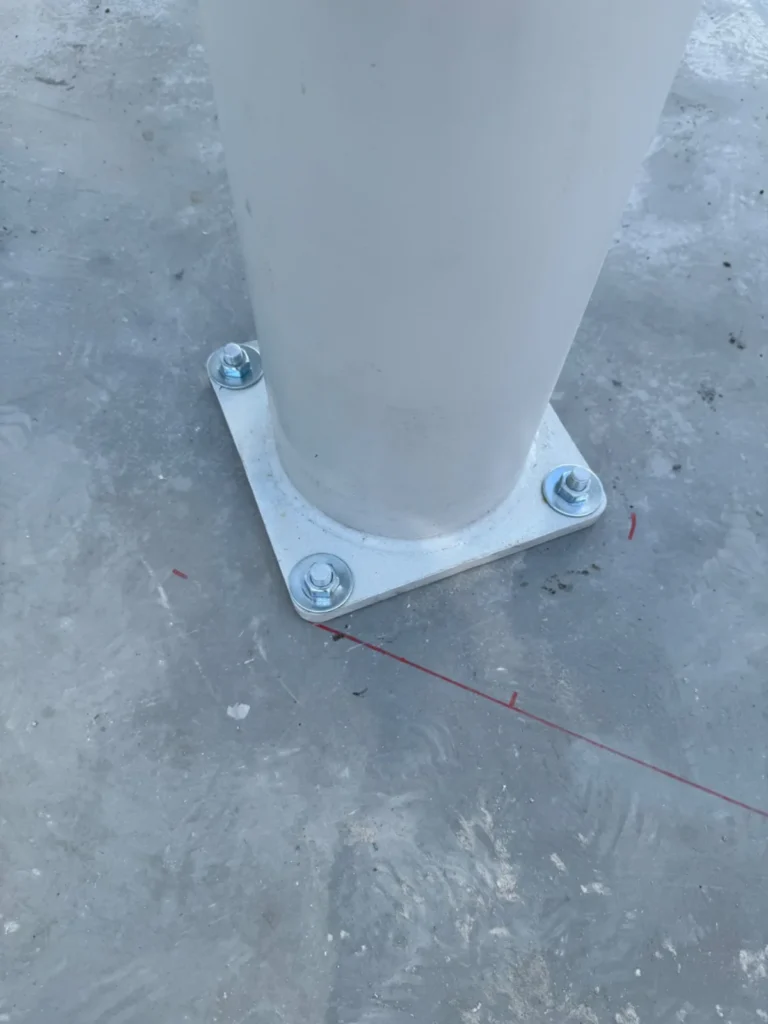
- Hole preparation — blowing out and removing dust before the resin goes in; without this the anchor never reaches its rated capacity.
- Chemical anchoring — Fischer resin and 240 mm studs, with an effective embedment of about 200 mm in concrete.
- Levelling and fixing — structures set plumb and bolted connections tightened to the installation requirements.
- Final check — anchor bedding and structural stability verified before handover.
The job in detail
What the customer got
Ready to put into service
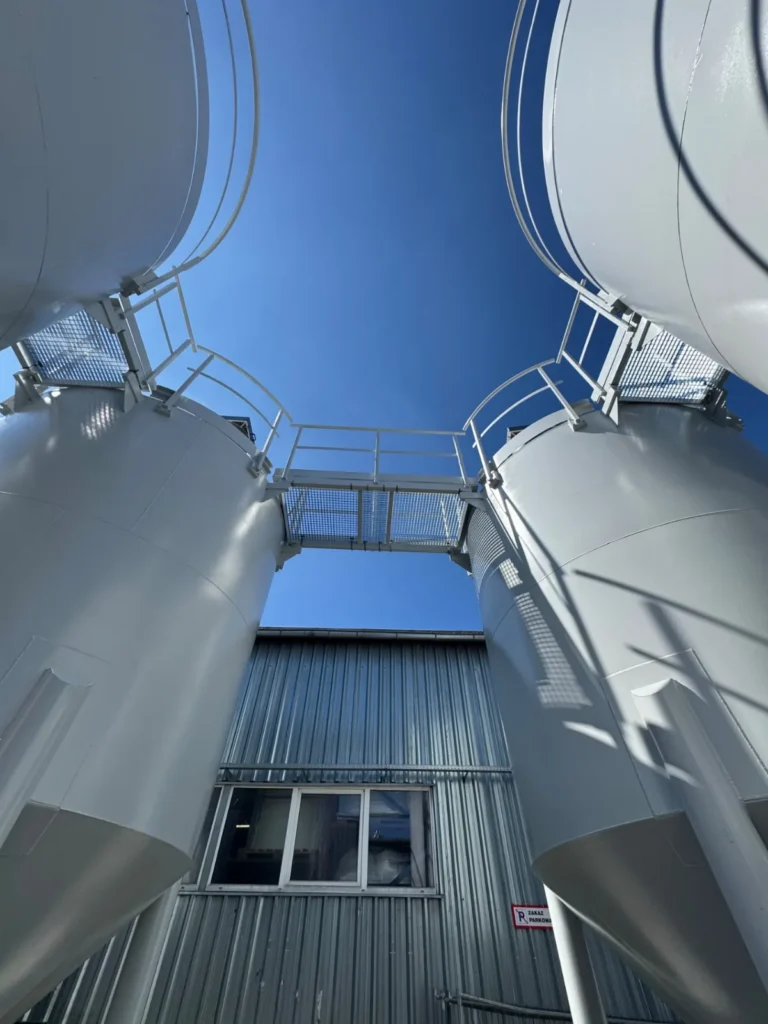
Silos levelled, anchored and checked, with no findings against the installation.
Anchoring done to the guidance
Resin cure times observed before the structure was loaded.
One contractor on site
Setting out, drilling, anchoring, levelling and final checks all on our side.
A record of the work
Documentation of the scope, the materials used and the result of the final check.
Why chemical anchors rather than mechanical ones
A mechanical anchor holds by expansion — it presses against the walls of the hole. A chemical anchor works differently: the resin fills the hole and bonds the stud to the concrete over the whole embedment depth. In practice that means lower stresses in the concrete near edges, and higher capacity for the same dimensions.
On a structure like a silo that matters twice over. A vessel carries a variable load — one thing empty, another full — and wind acts on it as well. The connection to the foundation has to survive years of load cycles, not just the first inspection.
All of that capacity depends on how the hole was prepared. Dust left after drilling acts as a separating layer between resin and concrete and can cut anchor capacity by a large margin. So every hole is blown out and cleaned before the resin goes in — the least impressive and most important step in the whole job.
Levelling: why a few millimetres matter
A silo set out of plumb carries its load asymmetrically. One side of the structure and one group of anchors take more than the design allowed for, and on a vessel that cycles between full and empty the imbalance accumulates. The effect often shows up only after a season: play at the connections, marks on the coating, uneven discharge from the cone.
That is why levelling happens before the connections are finally tightened, not after. The structure is set plumb, the vessels are checked against each other, and only then are the bolted connections torqued.
The last stage is verification: anchor bedding and structural stability. On this job we found nothing irregular in the installation or the anchoring, and the structure was handed over ready for service.
What to have ready before installation
The work goes smoothly when the site is ready before the crew arrives. A few things are worth settling in advance.
- A foundation that has cured — the concrete has to reach strength before anchoring.
- An anchor layout drawing — spacing and hole diameters.
- Access for equipment — a route in and room for a lift or a crane.
- An agreed sequence — where several structures are involved, which one goes first and where the others stand.
- Somebody on site who can decide — for the differences between the drawing and the actual site.
We install steel structures and vessels across Poland. After the work you get a report covering the scope, the materials used and the result of the final check — a document that earns its keep at later inspections and audits.