
Services · Cylinder reconditioning
Fletcher cylinder reconditioning
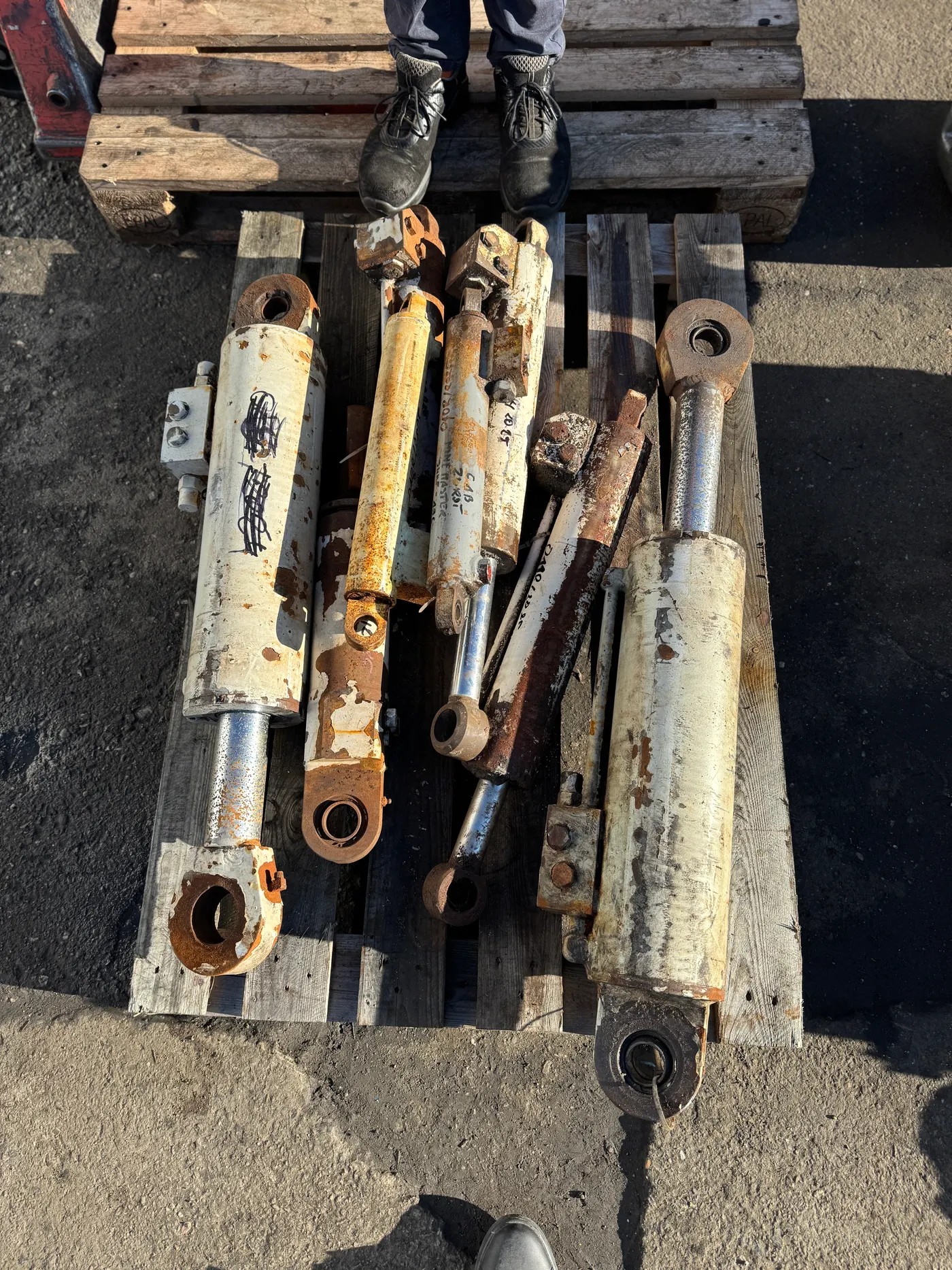
We recondition cylinders from mining machinery — roof bolters, supports and lifting rams — without waiting on parts shipped from overseas.
Cylinder reconditioning
Reconditioning of cylinders for Fletcher mining machinery: roof supports, lifting and extension rams. No waiting on parts from the USA. Wrocław, Poland.
Our specialisations
Roof support rams
Components that hold a load overhead. Internal tightness and the holding valve decide whether they are safe, and both get tested under load.
Lifting and extension cylinders
Long strokes in a confined machine envelope, usually with limited access for wipers — so contamination damage is the norm.
Work in water and dust
Mine water and rock dust attack the chrome from both sides. Rod assessment matters more here than anywhere else.
Parts no longer supplied
Where components come from overseas with a long lead time, we make them here from the dismantled unit.
Why these cylinders end up here
The usual reason is not the damage. It is the lead time. Parts for mining machinery built overseas can take weeks to arrive, and a machine standing idle underground costs more per week than the cylinder is worth.
With the unit stripped, we have every dimension we need. Seals are selected from measured dimensions rather than a part number, and metal components — guide bushes, glands, pistons, rods — are made on our own machines. That turns a parts problem into a workshop problem, which is a problem with a date attached to it.
What mining does to a cylinder
Water and dust together. Mine water carries dissolved salts and rock dust is abrasive, so the chrome is attacked chemically and mechanically at the same time. Pitting is therefore the normal finding, and the question is only whether it is shallow enough to plate over or deep enough to need the rod ground undersize first.
Restricted access to wipers. On machines where the cylinder sits inside a confined envelope, the wiper is hard to inspect and often left until it fails. By then the grit has been going past it for months and the bore is scored.
Load holding. Anything supporting roof or holding a load overhead is a safety component, not a productivity one. We test those under load, not merely for leakage, and put the result in the report.
What we need from you
Photographs of the nameplate and of the rod in raking light, plus the machine type and what the cylinder does wrong. If the plate is gone — common on machinery this age — six dimensions will do: rod diameter, bore, stroke, installed length, mounting type, and port type and position.
Tell us as well whether the unit holds a load. That changes both the testing and the documentation, and it is not something we want to find out after the cylinder is already assembled.
An independent workshop, not an authorised service centre
We are an independent reconditioning workshop based near Wrocław, Poland. We are not an authorised service centre for this manufacturer and we do not act on their behalf — brand names appear here only to say what equipment we work on. In practice that usually means a shorter lead time and a lower cost, and on discontinued series it is often the only route other than buying a new cylinder.
Why choose SOWMAR?
No transatlantic wait
Parts are made in our workshop instead of ordered in and waited on for weeks.
Load testing, not just leak testing
Anything that holds a load overhead is tested holding one, with the result in the report.
Dimensions unchanged
The cylinder returns with its original stroke and mountings, so it goes straight back into the machine.
Documentation
Test results and the scope of work in writing, which is what an audit will ask for.
Related services
Bosch Rexroth cylinder reconditioning
Reconditioning of Bosch Rexroth hydraulic cylinders: end cushioning, stroke measurement, rod chrome plating an…
Cylinders with safety valves
We build and service hydraulic cylinders fitted with safety valves. Valve calibration, pressure testing and do…
Double-acting cylinder reconditioning
Reconditioning of double-acting hydraulic cylinders: diagnosis, seals, rods, honing and pressure testing. Hard…
Before you call
The three questions customers ask most often — answered before we raise an invoice.
Sending parts to us from abroad
We are based near Wrocław in south-west Poland, inside the EU. Parts arrive here by courier or pallet freight from across Poland and from EU countries — there is no customs clearance on shipments sent within the EU, so a pallet from Germany or Czechia moves the same way a domestic one does.
1
Send photos first, not the part
A photo of the nameplate, a photo of the whole unit and a line about what it does wrong. We will tell you whether it is worth reconditioning before you pay for freight.
2
Drain the oil
Hydraulic units must be drained before dispatch — couriers refuse them otherwise, and a leaking pallet is usually rejected on arrival.
3
Pallet, not a parcel
Anything above roughly 30 kg or 1.5 m travels safest strapped to a pallet, with the rod end protected. Long cylinders need the rod retracted and secured.
4
Send it to the workshop address
ul. Stalowa 1-13, hala 17, 55-330 Błonie, Poland. Put your company name and a contact number on the paperwork so we can match the pallet to the enquiry.
We can quote and invoice in EUR. If you are a VAT-registered business in another EU country, tell us your VAT number when you ask for the quote. Return freight is arranged the same way the part came in — we will confirm the cost together with the quotation, before any work starts.